Every day, clinics lose time and money due to inefficient fax-based referral systems. Up to 35% of referral faxes are incomplete, costing practices $200,000 to $600,000 annually and delaying patient care. The solution? Tools that track and manage referrals effectively.
Here’s a quick breakdown of three approaches to referral management:
- Fax Machines: No tracking, high error rates, and slow processing.
- Real-Time Fax Tracking: Adds visibility with dashboards and reduces errors but requires manual updates.
- Diagna's FAXFlo & Referral Manager: Automates the process, cutting staff time by 80% and boosting referral completion rates to 90 to 95%.
Manual workflows hurt both patient care and revenue. Automated tools like Diagna's system solve these problems by ensuring referrals are processed, scheduled, and completed efficiently.
1. Traditional Fax Referral Methods
Faxing remains a dominant communication tool in healthcare, with over 70% of U.S. providers still relying on it and transmitting more than 9 billion pages annually. However, this widespread method comes with serious drawbacks.
Tracking Visibility
Once a fax leaves the machine, it essentially disappears into a black hole. There’s no confirmation that it was received, no timestamp showing when it was opened, and no way to know if any action was taken. As Cortney Swartwood from WorldView explains:
"Fax machines don't give you any context - they give you a document and a lot of unanswered questions."
This lack of visibility can cause significant workflow disruptions, leaving providers unsure if their referrals were handled in a timely manner.
Processing Time
While sending a single-page fax might take just 30 to 60 seconds, a 10-page packet can stretch to 5 to 10 minutes. Busy lines can add another 2 to 5 minutes to the process. If the transmission fails, staff must start over manually, as there’s no automated retry feature. In high-volume practices, these delays can quickly pile up.
Error Rate
Analog faxing has a failure rate of about 5 to 6%, while faxing over IP networks can see failure rates soar to 20%. On top of that, manual handling errors lead to consult notes being misfiled or ignored 23% of the time. These issues can severely disrupt patient care and coordination.
Staff Time and Referral Completion
Coordinating a single referral takes about 45 minutes of staff time and typically requires 2.7 follow-up attempts. Despite these efforts, 25 to 40% of referrals never result in a completed specialist appointment, often without the referring practice realizing it. The heavy administrative burden contributes to a staff turnover rate of over 25% annually.
These inefficiencies highlight the urgent need for solutions like real-time fax tracking, which can address many of these challenges and improve referral workflows.
2. General Real-Time Fax Tracking Solutions
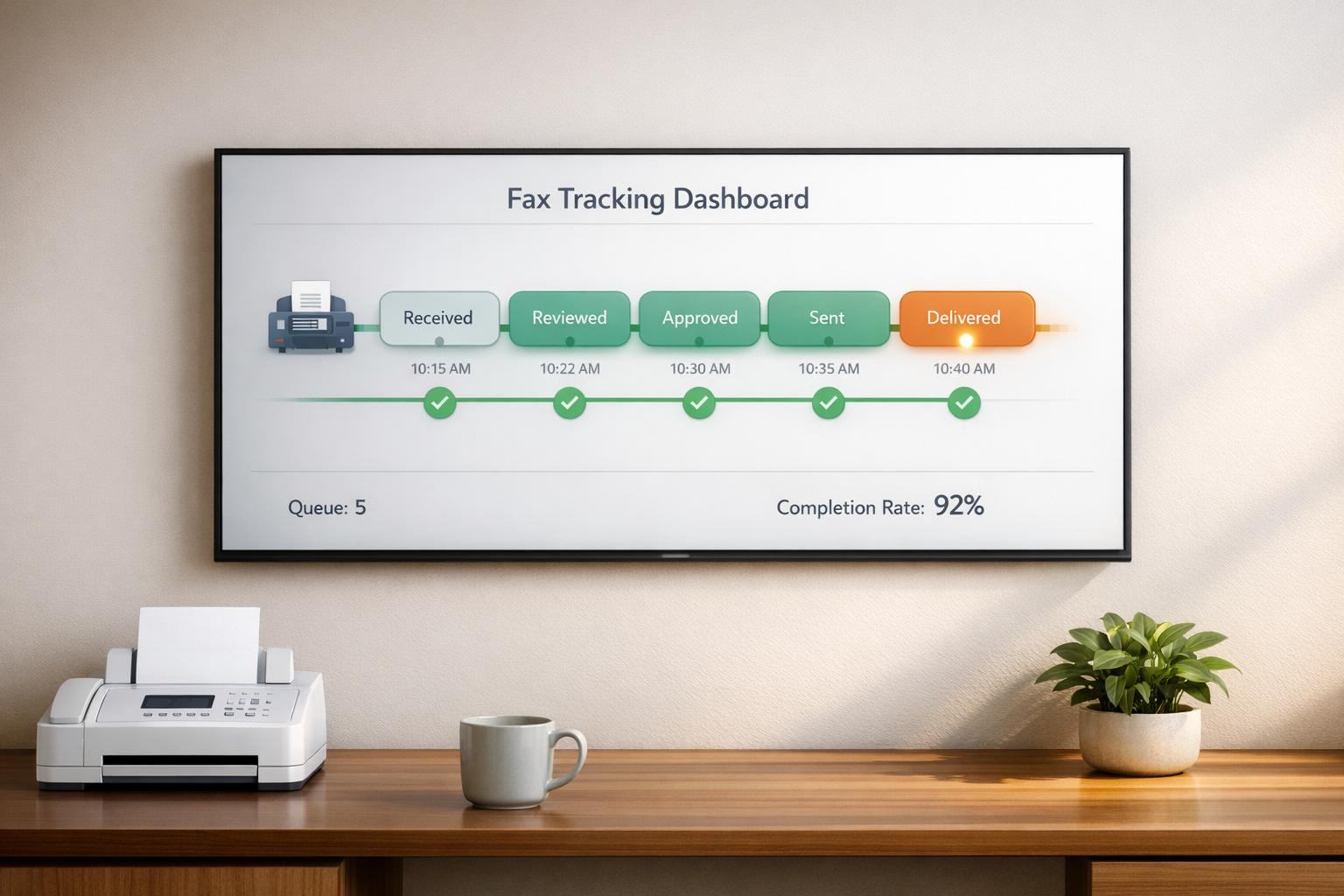
Real-time fax tracking tools solve a major problem with traditional faxing: you’re left in the dark after hitting "send." These tools replace uncertainty with live status dashboards that organize referrals into stages like pending authorization, patient contacted, scheduled, or completed. They also generate aging reports to flag delays, such as authorizations pending for over five days or patient contacts taking more than two weeks.
Tracking Visibility
Switching from no visibility to a live audit trail is a game-changer. Practices using real-time dashboards can spot referral leakage patterns four times faster than those relying on monthly reports.
Processing and Error Rate
Optical Character Recognition (OCR) technology speeds up document processing, cutting the time from 5 to 10 minutes down to under 30 seconds. It also slashes manual error rates from 23% to less than 3%. Automated retry logic further minimizes fax failures. For instance, one study found that retrying failed faxes every 10 to 30 minutes (up to 10 attempts) reduced the failure rate from 37.7% to 9.9%, with 98.7% of initially failed faxes eventually delivered.
Staff Time and Referral Completion
These efficiency gains free up staff hours. Manual tracking takes 3 to 5 staff hours per 100 referrals each week. Automated systems not only recover this time but also improve referral completion rates from 65 to 75% (typical of manual workflows) to 90 to 95%. This boost ensures referrals are not overlooked, directly benefiting patient care. However, there’s an important distinction to note: tracking shows the status of a referral, while management actively moves it forward using tools like automated patient outreach and prior authorization submissions.
Sami Malik, Founder & CEO of Linear Health, summed it up well:
"Visibility without automation is like having a very accurate thermometer when your house is on fire. You can monitor the temperature with precision while everything burns."
While basic tracking improves visibility, practices with high referral volumes may find it insufficient for closing workflow gaps. Real-time tracking tools are a step forward, but integrating proactive management features can push referral completion rates even higher.
3. Diagna's FAXFlo and Referral Manager
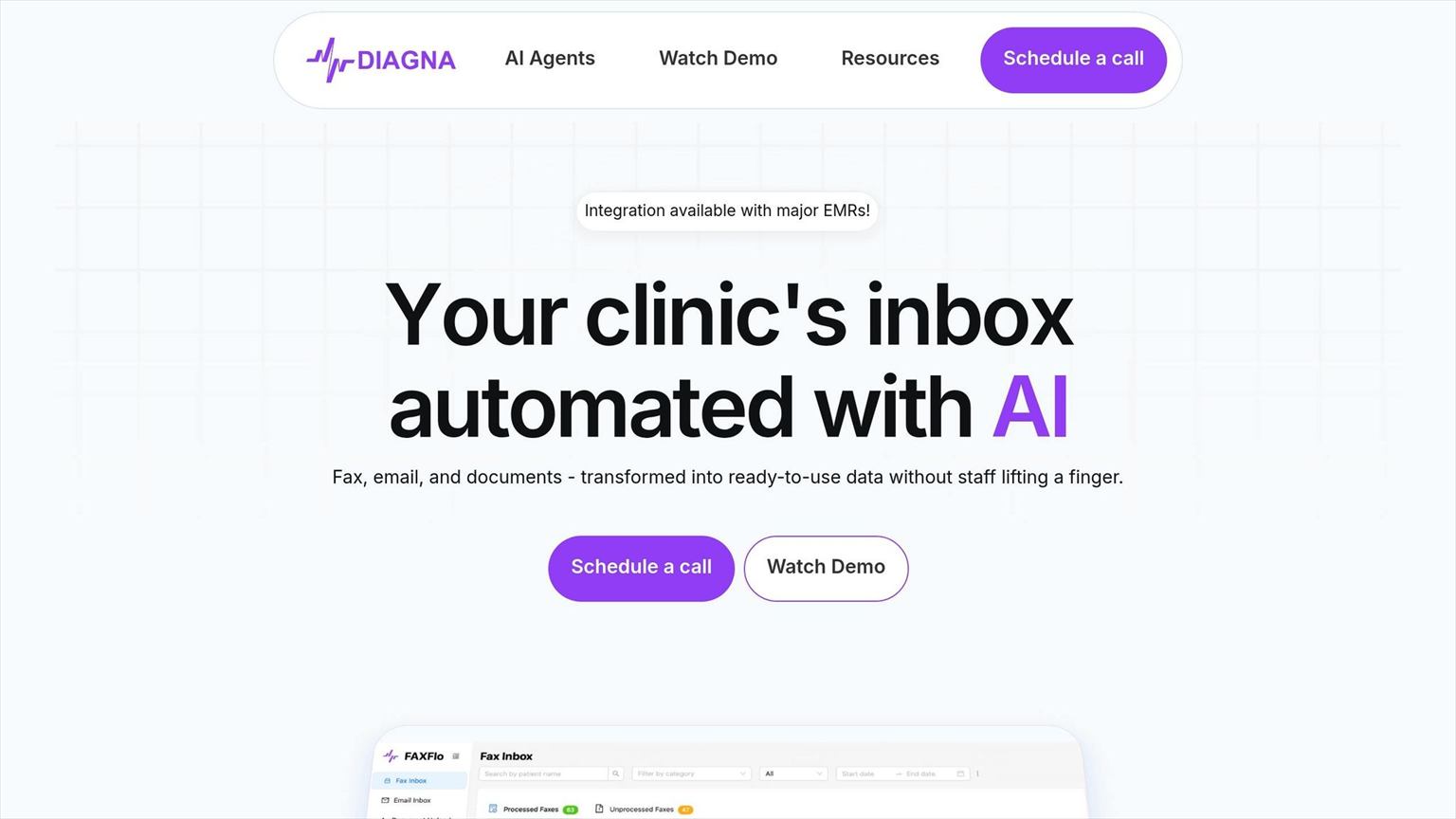
Diagna's solution goes beyond simple tracking by actively working to ensure referrals are completed. With FAXFlo and the Referral Manager, clinics benefit from real-time tracking and automated workflows that transform stalled referrals into scheduled appointments.
Tracking Visibility
FAXFlo streamlines fax processing, automatically routing incoming faxes, while the Referral Manager oversees each referral from start to finish. Staff can access a centralized dashboard that provides an at-a-glance view of all open referrals.
"Tracks each referral end-to-end, ensuring timely follow-ups and zero missed patients." - Diagna
Processing Time
FAXFlo processes faxes instantly, saving clinics more than 20 hours per week. This efficiency reduces the time needed to schedule appointments, often enabling same-day outreach.
Error Rate
Diagna's AI-driven system achieves a 94%+ accuracy rate in document processing. This eliminates the need for manual data entry, which is prone to errors. The platform extracts patient details directly from incoming faxes and integrates this information into the appropriate electronic medical record (EMR). By minimizing errors, the system simplifies administrative tasks and ensures smoother operations.
Staff Time and Referral Completion
With enhanced accuracy and efficiency, clinics experience reduced administrative workloads, allowing them to recover revenue that might otherwise be lost. The platform can replace full-time administrative tasks, delivering noticeable results within the first month. Clinics using Diagna's automated referral workflows have reported a 15% increase in revenue, primarily by scheduling referrals that might have been overlooked.
"Missed actions and delays can reduce clinic revenue by up to 10% annually." - Diagna
Pros and Cons of Each Approach
Fax Referral Management: Traditional vs. Tracking vs. Automated
Different referral management methods come with their own set of challenges and benefits. Here's a breakdown of what referral coordinators experience with each approach:
| Factor | Traditional Fax | General Real-Time Tracking | Diagna's FAXFlo & Referral Manager |
|---|---|---|---|
| Visibility | None; referrals often disappear into a "black hole" until someone follows up | Offers status dashboards and audit trails | Provides a full lifecycle view with automated follow-ups |
| Processing Speed | Takes 5 to 10 minutes per 10-page fax, plus manual triage | Faster transmission, but actions still require manual intervention | AI-powered triage processes referrals almost instantly, saving over 20 hours weekly |
| Accuracy | Prone to errors like lost pages, typos, and misfiling | Digital logs and OCR help, but errors can persist | Achieves over 98% accuracy with automated EMR filing |
| Staff Workload | High; manual tasks take 3 to 5 hours for every 100 referrals | Moderate; additional status updates increase workload | Low; reduces manual work by about 80% |
| Referral Completion | Only 25 to 40% of referrals result in appointments | Visibility aids follow-up, but leakage issues remain | Achieves 90 to 95% closed-loop documentation rates |
This table highlights the strengths and weaknesses of each method. Traditional faxing, while familiar, carries significant hidden costs. Clinics spend $20 per manually filed fax, and staff time is consumed by repetitive tasks and missed opportunities to convert referrals.
Real-time tracking tools improve visibility with dashboards and logs, yet they fall short on automation. Coordinators still need to manually update statuses, adding extra steps without reducing their overall workload. As Sami Malik, Founder & CEO of Linear Health, explains:
"The tracking system added work - now they [coordinators] have to update referral status in addition to doing the actual coordination - without eliminating any of the tasks that consumed their time."
Conclusion
Traditional fax-based referral methods often leave clinics struggling with incomplete referrals - ranging from 25 to 40% - and limited visibility into the process. Even with general real-time tracking, manual steps are still required. AI-driven tools like Diagna's FAXFlo and Referral Manager eliminate these inefficiencies by automating the referral lifecycle, from document intake to scheduling, bridging the gaps that manual processes can't.
Referral leakage can cost clinics between $200,000 and $600,000 annually in lost downstream revenue. This isn't a problem that can be solved with minor adjustments - it demands a more comprehensive solution.
To address this, clinics should begin by analyzing 90 days of referral data to identify where drop-offs occur. From there, adopting a tiered automation strategy is key: use AI-assisted tools for fax-dependent specialists and integrate directly with EHR systems wherever possible. This ensures no referral is overlooked. Clinics using automated, closed-loop referral tracking systems report an 18% improvement in HEDIS care gap closures compared to manual processes. Beyond improving patient care, such systems also safeguard revenue growth.
For independent specialty clinics, the choice is clear: stick with outdated, resource-draining workflows or embrace automation to reclaim both time and revenue.
FAQs
What is real-time fax tracking?
Real-time fax tracking keeps a constant eye on fax transmissions, offering instant updates on the status of both incoming and outgoing faxes. This makes workflows more efficient by cutting down on delays and simplifying the patient referral process. With up-to-the-minute fax status details, healthcare teams can stay better organized and maintain seamless communication during referrals.
How is fax tracking different from referral management?
Fax tracking involves keeping tabs on the real-time status of fax transmissions. This ensures that critical documents, such as referral packets, are sent and received securely. It also provides updates on delivery progress, any failures, or retry attempts.
On the other hand, referral management encompasses the entire referral process. This includes everything from data extraction and routing to tracking, follow-ups, and integration with EHR systems. While fax tracking is one component of referral management, the broader process ensures a smooth and coordinated workflow, ultimately supporting better patient care.
What does it take to integrate automated fax workflows with my EMR?
Integrating automated fax workflows with your EMR starts with taking a close look at your current referral process. This means identifying where automation can make a difference and using AI-driven tools to simplify how you handle faxes. The main steps include linking faxed documents directly to your EMR, automating the extraction of critical data, and ensuring faxes are routed accurately - cutting down on manual tasks. To make this work smoothly and improve referral tracking, it’s important to fully understand your existing workflow first.
Referral management
Diagna finds referrals in your faxes, flags anything missing, and keeps each one moving until the patient is booked.
See how Diagna manages referrals