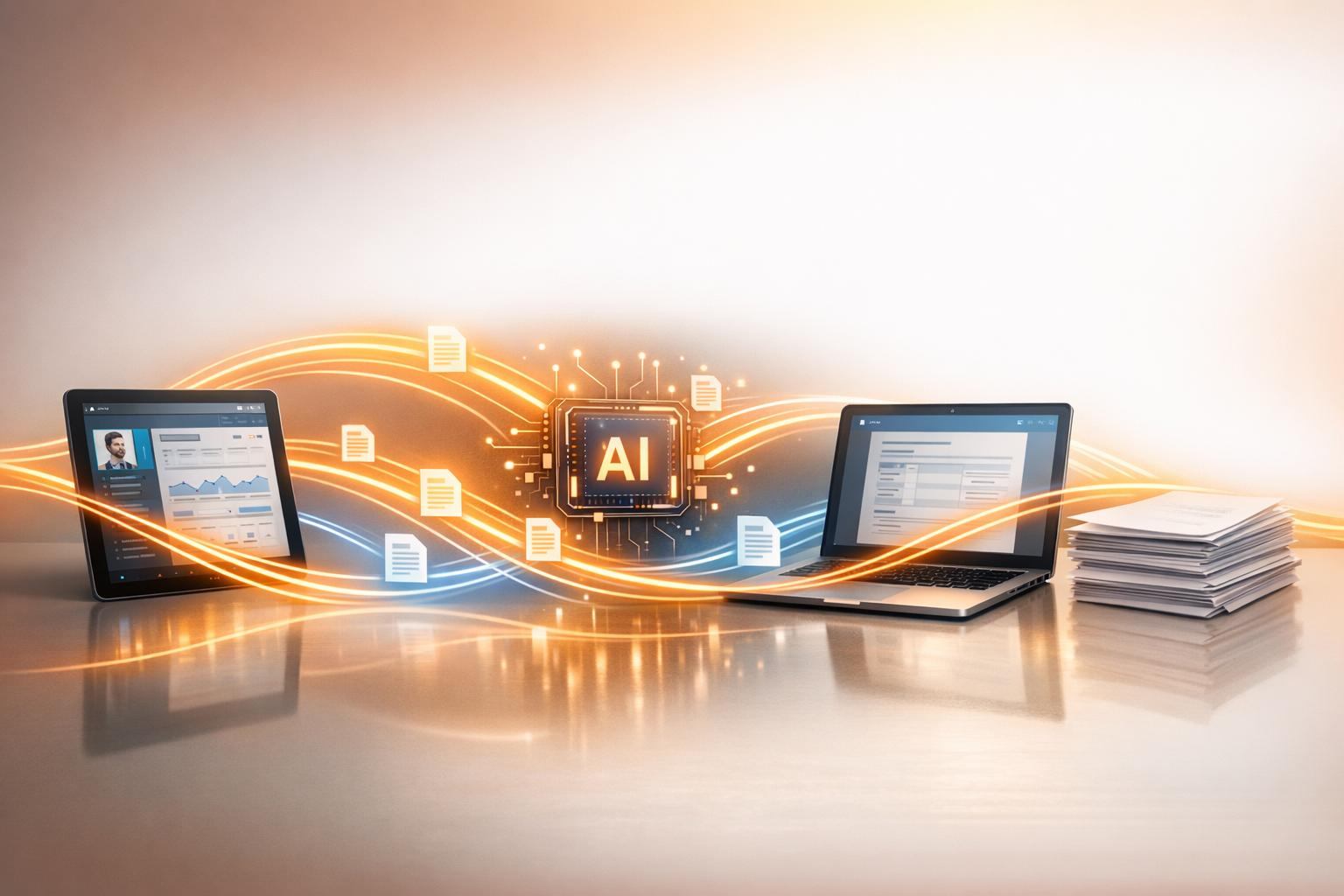
Clinics face an overwhelming administrative burden, with healthcare professionals spending up to 50% of their time on documentation. This workload contributes to 46% of physicians reporting burnout in 2025. AI is stepping in to address these challenges by automating repetitive tasks and improving efficiency.
Key highlights include:
- 20.4% reduction in note-writing time and 30% less after-hours work with AI scribes.
- 70% decrease in documentation time in Ontario clinics, saving up to four hours per week.
- AI-powered fax management processes documents in 40 seconds instead of 2 minutes, saving 8,500 staff hours in 18 months at Penn Medicine.
- Referral automation reduced processing time from 23 days to 1.5 days, saving 1,200 staff hours in six months at Montage Health.
AI tools integrate with existing EMR systems to streamline fax sorting, document classification, referral tracking, and prior authorization. By reducing manual workload, clinics can focus more on patient care while improving staff satisfaction and operational efficiency.
AI Impact on Healthcare Documentation: Time Savings and Efficiency Metrics
432 - How AI is transforming EMR implementation. Dr Brian Zimmerman, Microsoft - Nuance
AI-Powered Document Triage and Fax Management
Faxing continues to be a cornerstone of communication in healthcare. Around 75% of U.S. medical institutions still depend on fax machines to meet HIPAA compliance and ensure interoperability. However, this reliance often creates inefficiencies, with staff spending an average of 2 minutes per document sorting and filing incoming faxes.
AI is stepping in to modernize this outdated process. By combining Optical Character Recognition (OCR), Machine Learning (ML), and Natural Language Processing (NLP), AI systems can automatically categorize and route documents. These tools significantly reduce errors by matching incoming faxes to the correct patient records through automated entity recognition. The result? Faster, more accurate document handling and seamless integration with Electronic Medical Records (EMRs).
Automated Document Classification
AI models are now capable of identifying and classifying various types of medical documents - such as lab results, referrals, prescriptions, and consultation notes - while extracting key details like patient and physician information. Advanced systems often use a hybrid approach, combining transformer models like LayoutLMv3 with predefined rules tailored to the healthcare domain. This ensures greater precision in recognizing medical entities.
Take the University of Pennsylvania Health System (UPHS) as an example. Their AI-powered system, coordn8, processes a staggering 8,000 to 9,000 faxes daily across more than 150 fax lines. Developed by Penn Medicine's Center for Health Care Transformation and Innovation (CHTI), under the leadership of Dr. Yevgeniy Gitelman and strategist Jency Daniel, this system has transformed fax management. Within its first 18 months of operation (through 2025), coordn8 tripled processing speeds, reducing the time per fax from 2 minutes to just 40 seconds - saving a total of 8,500 staff hours.
"Reducing processing time allows staff to focus on more patient-facing activities and results in higher job satisfaction. On top of that, we designed this in a way so that team members can easily cover for each other. Vacations or sick days won't slow the process down anymore."
- Jency Daniel, DNP, MSN, RN, Lead Transformation Strategist, Penn Medicine Center for Health Care Transformation and Innovation
The impact on staff morale was immediate. Within just two weeks, satisfaction with the intake process jumped from 35% to 60%. For every 100,000 faxes processed, the system saves approximately 2,300 staff hours, allowing clinical teams to dedicate more time to patient care instead of administrative tasks.
Faster Document Routing to EMRs
With accurate classification in place, AI also simplifies the process of routing documents to EMRs. Instead of manually handling each fax, AI automatically transfers documents directly into patient charts.
Between May 2022 and December 2023, the Amplify Care team in Ontario (formerly eHealth Centre of Excellence) tested a Business Automation Workflow (BAW) platform to bridge digital eReferral systems with traditional fax receivers. This system processed 4,504 eFaxes for 4,132 unique patients across 224 locations. By implementing intelligent retry logic to address common transmission errors - like busy signals or disconnects - the team reduced the fax failure rate from 37.7% to 9.9%, achieving a 98.7% success rate for document delivery after automated retries.
Similarly, tools like Diagna's FAXFlo are bringing these advancements directly to clinics. Using AI, FAXFlo triages incoming faxes and routes them seamlessly into EMR systems. This eliminates manual sorting and ensures documents are correctly placed in patient charts without staff intervention. By integrating with existing EMR systems, these solutions enhance efficiency while minimizing workflow disruptions - giving healthcare teams more time to focus on patients instead of paperwork.
Automated Referral Tracking and Loop Closure
Handling referrals manually often slows down healthcare processes. Shockingly, 56% of referrals are still sent by fax because of interoperability issues, and somewhere between 40% and 65% of referrals are never completed. On top of that, processing a single referral can take as long as 70 minutes. While fax management has seen some improvements, AI is now stepping in to streamline referral tracking and ensure care loops are closed more efficiently.
By automating referral tracking, AI eliminates the need for manual data entry. It converts faxed referrals into digital entries for electronic medical records (EMRs), reducing errors and saving time. With real-time monitoring, clinics can take action quickly, such as making follow-up calls within 48 hours of receiving a referral, which helps keep patients engaged in their care journey.
Real-Time Referral Status Tracking
AI-powered tools make it easier to share critical patient information - like medications, allergies, and visit notes - with specialists before appointments. A study by Partners HealthCare System, led by Dr. Tejal K. Gandhi from November 2005 to July 2006, tested the "Referral Manager" tool within their Longitudinal Medical Record system. The results were striking: specialists were three times more likely to receive patient information in advance. Specifically, 62% of specialists received information before visits, compared to just 12% of those not using the system. Additionally, 70% of patients reported that their specialists had all the necessary information beforehand, and conflicting medical advice dropped significantly - from 20% to 6%.
Montage Health provides another compelling example. In January 2025, under the guidance of Faith Balaban and Meg Dingae, they introduced AI-powered referral automation into their Healthy Together program. This change brought the referral processing time down from 23 days to just 1.5 days. At their Breast Care Center, the system handled 10,500 referrals in six months, saving over 1,200 staff hours and boosting program participation by 15%.
"Speed isn't just a metric - it changes outcomes. Whether it's getting patients into vital screenings or starting diabetes management, faster referrals mean better care."
- Meg Dingae, Program Leader, Montage Health
The system also allowed 20% of patients to self-schedule their appointments, reducing administrative work while giving patients more control over their healthcare.
Closing Care Loops
AI doesn't just track referrals - it ensures the loop is closed by filing specialist notes directly into EMRs. This automation enhances care coordination for primary care physicians (PCPs). For example, in the Partners HealthCare study, PCPs using the Referral Manager received communication back from specialists at a rate of 69%, compared to 50% in the control group.
"Facilitating transmission of referral information electronically can improve physician communication."
- Tejal K. Gandhi, MD, MPH, Brigham & Women's Hospital
Diagna's Referral Manager is a great example of how this works. It integrates smoothly with existing EMRs, tracks referral statuses in real time, and ensures specialist notes are attached to patient records. By automating follow-ups and sending status notifications, it lightens the workload for providers and ensures patients receive timely, coordinated care.
Digital consent tools also play a role in speeding things up. At Penn Medicine, a text-based system called "eDisclosure" replaced traditional mail-in consent forms, reducing the time to collect patient signatures by 85% and cutting six days off the intake process. These advancements highlight how AI-driven solutions improve both the efficiency of operations and the quality of patient care throughout the referral process.
Prior Authorization and Form Automation
Prior authorization has long been a tedious process, requiring staff to manually fill out forms, pull data from EHRs, and submit packets to insurers. AI is transforming this by automating key steps like data extraction, submission, and tracking.
Using HL7/FHIR standards, AI can classify incoming documents and pull payer-specific data - such as vitals, medications, lab results, and imaging - directly from EHRs. It then compiles and electronically submits complete request packets to insurers. This automation frees staff from the repetitive task of form-filling, allowing them to focus more on patient care. Research indicates that integrating AI into these workflows speeds up prior authorization determinations by 20% to 40%. By streamlining these processes, AI not only accelerates approvals but also helps reduce the overall administrative burden.
Reducing Administrative Burdens
AI takes over repetitive, rule-based tasks that often consume valuable staff hours. By automating data entry and minimizing back-and-forth communication with payers, it significantly reduces delays caused by missing clinical details.
Advanced monitoring tools also play a role. These tools check payer portals daily for updates and notify patients and facilities as soon as approvals are granted. This "human-in-the-loop" approach ensures staff only need to step in for complex cases or when AI flags low-confidence data extractions. It's worth noting that 95% of U.S. businesses are now exploring or implementing AI for streamlining document workflows, aiming to replace manual processes.
"AI integration in healthcare document workflows is no longer a side project, it is the connective tissue that steadies intake, charting, referrals, prior authorization, and billing."
- TATEEDA
A practical example of this is Diagna's Prior Auth Bot. This tool integrates with existing EMRs to extract clinical data, accurately complete authorization forms, and submit them electronically. By automating these repetitive tasks, clinics can redirect staff time to higher-value activities, such as patient engagement and care coordination.
Accuracy and Compliance
AI doesn't just lighten the workload - it also improves the accuracy and compliance of prior authorization submissions. By verifying that billed lines align with chart documentation, AI helps reduce the risk of denials. In fact, healthcare organizations typically see a 10% to 20% drop in preventable denials once AI closes the gap between data extraction and coding.
Additionally, AI ensures compliance by creating unchangeable audit logs that link every data field to its source and model version. It also sets accuracy thresholds, such as 98% accuracy for Medical Record Numbers, to maintain data integrity. This level of precision not only speeds up the approval process but also shields clinics from compliance-related penalties.
Key Metrics and Implementation Insights
Performance Metrics from Studies
Recent research highlights how AI is reshaping EMR-integrated workflows, delivering measurable time savings and boosting efficiency. For instance, a randomized trial conducted by UCLA Health in November 2025 evaluated the impact of AI scribes on 238 physicians. Those using Nabla reduced their average documentation time from 4 minutes 30 seconds to 3 minutes 49 seconds - saving 41 seconds per note. Alongside this, burnout scores among these physicians improved by about 7% compared to the control group.
Penn Medicine's "coordn8" system transformed fax management, processing 3,000 faxes daily and saving 8,500 staff hours over 1.5 years. Similarly, HCA Healthcare's AI-driven cancer detection system shaved six days off the time from diagnosis to initial treatment, while boosting patient retention by more than 50%.
"Documentation burden has become a major contributor to physician burnout, with doctors often spending two hours on paperwork for every hour of patient care."
- Dr. Paul Lukac, Chief AI Officer, UCLA Health
AI's benefits extend across various applications. For example, AI tools have cut after-hours work by 20% to 30%, equating to 83 hours saved annually per physician. They’ve also improved quality metrics - AI-assisted clinical letters met quality thresholds 70% of the time, compared to just 29% with standard EHR systems. These findings underscore AI's potential to transform EMR workflows and set the stage for practical strategies clinics can adopt.
Implementation Tips for Clinics
Clinics aiming to achieve similar results should prioritize targeted strategies for implementing AI tools. Start by identifying departments burdened with heavy administrative tasks and a willingness to embrace new technology. According to Jency Daniel from Penn Medicine:
"Reducing processing time allows staff to focus on more patient-facing activities and results in higher job satisfaction."
- Jency Daniel, DNP, MSN, RN, Lead Transformation Strategist, Penn Medicine Center for Health Care Transformation and Innovation
A phased rollout approach works best. Begin with a pilot program to refine specialty-specific templates before scaling across the clinic. Seamlessly integrating AI tools with existing EMR systems like Epic or Cerner is crucial to prevent workflow disruptions. Appointing "medical informatics champions" or clinical leaders can further ease adoption by gathering feedback and encouraging peer buy-in. Comprehensive training sessions are equally important to address provider concerns and improve speech recognition accuracy over time.
To measure success, clinics should continuously monitor key performance indicators such as after-hours charting time, claim denial rates, and patient wait times. While generative AI models can occasionally produce fabricated data - ranging from 3% to 28% of cases - maintaining active physician oversight is essential. Platforms like Diagna tackle these issues by integrating securely with any EMR, ensuring workflows remain accurate, secure, and compliant.
| Use Case | Manual Process | AI-Enhanced Process | Key Benefit |
|---|---|---|---|
| Fax Management | 2 minutes per document | 40 seconds per document | 3x faster processing; 8,500 hours saved |
| Clinical Notes | 6.2 minutes per appointment | 5.3 minutes per appointment | Reduced cognitive load |
| Patient Consent | 7-day average turnaround | 85% reduction in signature time | Care loops closed 6 days sooner |
| Patient Triage | 21.81 minutes wait time | 8.78 minutes wait time | 60% reduction in queuing |
Conclusion
AI-powered automation is transforming how clinics handle EMR-integrated document workflows. By automating processes like high-volume document classification and routing, clinics are slashing processing times by over 60%, saving thousands of staff hours each year. For instance, UCSF Health is on track to save around 25,000 staff hours annually, while Penn Medicine has already recovered 8,500 staff hours in just 18 months.
These time savings also have a direct impact on clinician well-being. Administrative tasks can take up as much as 55% of a physician's workday, but with AI handling these repetitive duties, clinicians can devote more time to patient care - without sacrificing accuracy or compliance.
To maintain these efficiency gains, clinics must focus on creating secure, EMR-integrated workflows with bidirectional connectivity. Tools like those offered by Diagna can help. Their AI-driven solutions for fax management, referral tracking, and prior authorization integrate smoothly with any EMR system, improving workflows while ensuring that critical human oversight remains intact.
As AI technology continues to advance, clinics have the opportunity to further streamline their operations. Intelligent automation doesn’t just enhance efficiency - it also supports better patient care by allowing clinicians to focus on what truly matters: their patients. By embracing these tools, healthcare providers can prepare for a future where routine tasks are automated, and human expertise takes center stage.
FAQs
How does AI help reduce physician burnout in EMR workflows?
AI-powered tools are transforming the way physicians handle documentation and administrative tasks, which are often major sources of burnout. Research shows that real-time AI assistants can reduce the time spent on note-writing by an impressive 40 to 60%. Even more striking, they can save up to 90 minutes per day by cutting down after-hours charting. Beyond saving time, these tools enhance data accuracy by automatically extracting and entering structured information into electronic medical records (EMRs). This means clinicians can spend less time on paperwork and more time focusing on their patients.
For clinics leveraging AI solutions like Diagna, the advantages go even further. Tasks like fax triage, referral tracking, and prior authorization are automated, eliminating tedious clerical work and reducing interruptions during patient visits. These systems also ensure compliance with security standards. By simplifying workflows and easing the mental strain of administrative duties, AI integration supports physicians in maintaining a better work-life balance.
How does AI improve fax management in healthcare?
AI-powered fax management brings a new level of efficiency and precision to healthcare workflows. By automating tasks such as triaging, classifying, and pulling key details from incoming faxes, it slashes processing time and reduces the need for manual intervention. In fact, research shows that automation can speed up these processes by up to three times, shaving days off patient intake cycles and freeing up staff to focus on more critical tasks.
Beyond speed, AI enhances data accuracy through tools like OCR (optical character recognition) and natural language processing. These technologies help ensure that essential information is captured correctly and entered into electronic medical records (EMRs) without errors. This reduces the chances of missed referrals or the need for time-consuming corrections.
What’s more, AI-driven fax solutions integrate effortlessly with EMR systems, turning traditionally paper-heavy processes into secure, digital workflows. This not only helps maintain compliance with regulations like HIPAA but also enables quicker decision-making, streamlines referrals, and improves the overall experience for patients.
How does AI make referral tracking more accurate and efficient?
AI is reshaping referral tracking by turning messy, unstructured data - think faxes and emails - into organized, searchable information that seamlessly integrates with electronic medical records (EMRs). With the help of optical character recognition (OCR) and natural language processing (NLP), AI pulls out essential details like patient information, specialties, and urgency levels. This not only slashes the chances of manual entry mistakes but also saves valuable time. Once the data is structured, AI takes it a step further by assigning referrals to the right coordinators, keeping tabs on their progress in real time, and sending reminders when deadlines approach - ensuring that no patient slips through the cracks.
The results speak for themselves. Automating referrals has dramatically shortened processing times - from weeks to just days - while cutting down administrative burdens and boosting scheduling efficiency by more than 40%. Tools like Diagna’s Referral Manager make the process even smoother by instantly categorizing and tracking referrals, delivering accurate and timely care without disrupting current workflows. This AI-driven system reduces delays, prevents revenue loss, and connects patients to specialists faster than ever before.
Automated data entry
Diagna pulls patient, insurance, and diagnosis details off each document and enters them into the chart. No retyping.
See how Diagna automates EMR data entry